Part 1: Microscopy
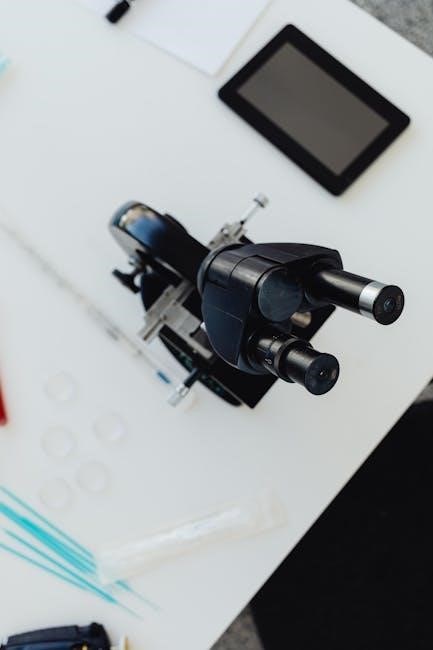
Benson’s Microbiological Applications‚ a cornerstone resource‚ details essential microscopy techniques. The 14th edition‚ including the 2025 release‚ offers 77 exercises with vibrant‚ illustrative guides.
These exercises comprehensively cover brightfield‚ darkfield‚ and phase-contrast microscopy‚ alongside crucial microscopic measurement protocols for accurate analysis.
Brightfield Microscopy
Benson’s Microbiological Applications Laboratory Manual dedicates significant attention to brightfield microscopy‚ the foundational technique in microbiology. This method‚ detailed within the manual‚ utilizes visible light and a system of lenses to magnify a specimen. The 14th edition‚ and subsequent 2025 release‚ provides clear‚ step-by-step instructions for proper specimen preparation and illumination optimization.
Students learn to effectively utilize the condenser and diaphragm to control light intensity and contrast‚ crucial for visualizing cellular structures. The manual emphasizes the importance of understanding magnification and resolution‚ explaining how these factors impact image clarity.
Furthermore‚ Benson’s guides users through troubleshooting common issues encountered during brightfield observation‚ such as adjusting focus and minimizing artifacts. The manual’s four-color format and wealth of photographs enhance understanding‚ making brightfield microscopy accessible to beginners while providing a solid foundation for advanced studies. It’s a core component of the 77 self-contained exercises.
Darkfield Microscopy
Benson’s Microbiological Applications Laboratory Manual thoroughly explains darkfield microscopy as a contrast-enhancing technique. Unlike brightfield‚ darkfield illumination directs light at an angle‚ so only light scattered by the specimen is visible‚ creating a bright image against a dark background. The manual‚ in its 14th edition and 2025 update‚ details the specific adjustments needed to achieve optimal darkfield conditions.
Students learn how to properly align the darkfield condenser and adjust the diaphragm to maximize light scattering and minimize glare. Benson’s emphasizes the technique’s utility in observing live‚ unstained microorganisms and delicate structures that are difficult to visualize with brightfield.
The manual highlights the advantages of darkfield for visualizing bacterial motility and observing the morphology of spirochetes. The 77 exercises include practical applications‚ and the four-color format‚ coupled with numerous photographs‚ aids in understanding the principles and practical execution of darkfield microscopy. It’s a valuable skill detailed within the comprehensive resource.
Phase-Contrast Microscopy
Benson’s Microbiological Applications Laboratory Manual dedicates significant attention to phase-contrast microscopy‚ a technique crucial for observing unstained‚ living cells. The manual explains how this method exploits differences in refractive indices within the specimen to generate contrast‚ making internal structures visible without staining. The 14th edition‚ with its 2025 release‚ provides detailed instructions on aligning the phase-contrast optics.
Students learn to adjust the annulus diaphragm and phase plates to achieve optimal contrast and halo-free images. Benson’s emphasizes the technique’s value in studying cellular morphology‚ motility‚ and internal organization. The manual’s 77 exercises offer hands-on experience‚ and the inclusion of numerous photographs clarifies the process.
The four-color format enhances understanding‚ and the manual highlights the benefits of phase-contrast for observing eukaryotic cells‚ such as protists‚ without disrupting their natural state. It’s a core skill thoroughly covered within this comprehensive laboratory resource‚ ensuring effective learning.
Microscopic Measurements
Benson’s Microbiological Applications Laboratory Manual underscores the importance of accurate microscopic measurements in microbiology; The manual details methods for determining cell size‚ utilizing both calibrated ocular micrometers and stage micrometers. The 14th edition‚ including the 2025 release‚ provides clear instructions on calibration procedures‚ ensuring precise measurements.
Students learn to convert between different units of measurement – micrometers‚ millimeters‚ and nanometers – crucial for reporting data effectively. Benson’s emphasizes the significance of understanding magnification and its impact on observed size. The manual’s 77 exercises incorporate practical measurement tasks‚ reinforcing theoretical knowledge.
The four-color format and abundant photographs aid in visualizing the process. Accurate measurements are vital for characterizing microorganisms and understanding their physiological properties‚ a skill thoroughly developed through this resource. The manual prepares students for advanced microbiological investigations requiring quantitative data.

Part 2: Survey of Microorganisms
Benson’s Microbiological Applications expertly guides students through diverse microbial life‚ including protists‚ algae‚ cyanobacteria‚ bacteria‚ molds‚ and yeasts.
The manual details ubiquity and characteristics.
Microbiology of Pond Water ౼ Protists‚ Algae‚ and Cyanobacteria
Benson’s Microbiological Applications laboratory manual provides a detailed exploration of the microscopic world found within pond water ecosystems. This section focuses on identifying and characterizing the diverse range of microorganisms inhabiting these environments‚ specifically protists‚ algae‚ and cyanobacteria.
Students learn to observe and differentiate these organisms based on their morphology‚ motility‚ and staining characteristics. The manual guides users through techniques for preparing wet mounts and stained slides to facilitate clear visualization under the microscope. Emphasis is placed on understanding the ecological roles of these microorganisms‚ including their contributions to primary production and nutrient cycling.
The 14th edition‚ with its recent 2025 updates‚ incorporates high-quality images and clear instructions to aid in accurate identification. Exercises are designed to foster critical thinking and observational skills‚ enabling students to appreciate the complexity and beauty of microbial life in freshwater habitats. This practical experience builds a strong foundation for further studies in microbiology and ecology;
Ubiquity of Bacteria
Benson’s Microbiological Applications laboratory manual effectively demonstrates the pervasive nature of bacteria through a series of practical exercises. This section highlights that bacteria are not confined to clinical settings but are ubiquitous‚ inhabiting diverse environments like air‚ soil‚ water‚ and surfaces.
Students perform experiments to culture bacteria from various sources‚ employing aseptic techniques detailed within the manual. These exercises emphasize the importance of sterile procedures to prevent contamination and ensure accurate results. The manual guides students through methods for observing bacterial growth patterns and colony morphology on different media types.
The 14th edition‚ including the 2025 release‚ provides updated protocols and clear illustrations to enhance understanding. It reinforces the concept that bacteria play crucial roles in ecological processes and are essential for life on Earth. This hands-on experience fosters an appreciation for the vast microbial world surrounding us and its significance.
The Fungi: Molds and Yeasts
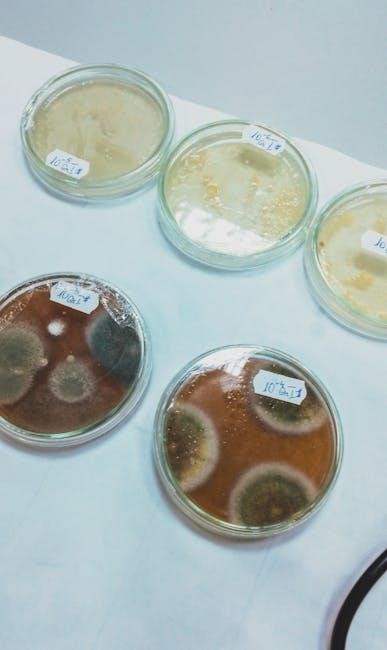
Benson’s Microbiological Applications laboratory manual provides a comprehensive exploration of fungi‚ specifically molds and yeasts‚ detailing their morphology‚ reproduction‚ and ecological roles. The manual guides students through techniques for isolating and identifying common fungal species from environmental samples.
Exercises focus on observing fungal structures‚ such as hyphae and spores‚ using microscopic methods described within the text. Students learn to differentiate between molds‚ characterized by filamentous growth‚ and yeasts‚ which are unicellular. The manual details methods for culturing fungi on various media‚ promoting optimal growth and visualization.
The 14th edition‚ with the 2025 release‚ features updated illustrations and protocols for accurate identification. It emphasizes the importance of fungi in decomposition‚ nutrient cycling‚ and various industrial applications. This section fosters an understanding of fungal diversity and their impact on human health and the environment.
Part 3: Manipulation of Microorganisms
Benson’s manual expertly details aseptic technique and pure culture methods. The 14th edition‚ with its 77 exercises‚ provides clear guidance for successful microbial handling.
Aseptic Technique
Benson’s Microbiological Applications laboratory manual dedicates significant attention to mastering aseptic technique‚ a fundamental skill in microbiology. This section‚ detailed across numerous exercises within the 77 provided‚ emphasizes preventing contamination during microbial handling.
The manual thoroughly explains procedures for sterilizing media‚ disinfecting work surfaces‚ and properly handling cultures. It stresses the importance of minimizing exposure to unwanted microorganisms‚ ensuring accurate experimental results. Students learn techniques like flame sterilization‚ proper handwashing protocols‚ and the correct use of biological safety cabinets.
The 14th edition‚ including the 2025 release‚ features clear‚ step-by-step instructions and illustrative diagrams to reinforce these critical concepts. Successful application of aseptic technique is paramount for obtaining pure cultures and reliable data‚ as highlighted throughout the manual’s practical exercises.
Pure Culture Techniques

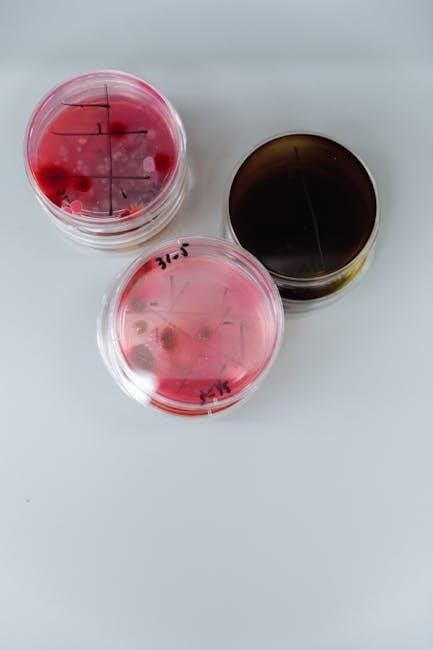
Benson’s Microbiological Applications laboratory manual provides extensive guidance on achieving pure cultures‚ a cornerstone of microbiological study. The manual details several methods for isolating single colonies from mixed populations‚ essential for accurate identification and characterization.
Students learn techniques like streak plating‚ pour plating‚ and serial dilution‚ all meticulously illustrated within the 77 exercises. Emphasis is placed on understanding the principles behind each method and recognizing potential sources of contamination. The manual stresses the importance of proper aseptic technique – detailed elsewhere – to ensure successful isolation.
The 14th edition‚ with its 2025 updates‚ includes enhanced visuals and detailed protocols for verifying culture purity. These techniques are crucial for downstream analyses‚ including staining‚ biochemical testing‚ and antimicrobial susceptibility testing‚ as covered in subsequent sections of the manual.
Part 4: Staining and Observations of Microorganisms
Benson’s manual expertly guides students through vital staining techniques – simple‚ negative‚ capsular‚ Gram‚ endospore‚ and acid-fast – for detailed microbial observation.
Smear Preparation
Benson’s Microbiological Applications laboratory manual meticulously details the crucial first step in many staining procedures: smear preparation. This foundational technique‚ described within the 77 self-contained exercises‚ ensures successful visualization of microorganisms under the microscope.
The manual emphasizes the importance of creating a thin‚ evenly distributed film of bacterial cells on a glass slide. Proper heat fixation is also highlighted‚ as it adheres the cells to the slide while preventing distortion of cellular morphology.
Detailed instructions cover aseptic transfer of the bacterial culture‚ spreading the inoculum‚ and the correct application of heat. Benson’s stresses that a well-prepared smear is paramount for accurate staining and subsequent microscopic observation‚ directly impacting the reliability of results. The concise version of the 14th edition provides clear‚ step-by-step guidance for students of all levels.
Simple Staining (Observing Bacterial Cell Morphology)
Benson’s Microbiological Applications laboratory manual dedicates a comprehensive exercise to simple staining‚ a fundamental technique for observing bacterial cell morphology. This method‚ detailed within the 77 exercises‚ utilizes a single dye to highlight the bacterial cells‚ allowing for visualization of their shape‚ size‚ and arrangement.
The manual clearly outlines procedures for applying common simple stains like methylene blue or crystal violet. It emphasizes the importance of proper staining and rinsing techniques to achieve optimal contrast and clarity.
Benson’s stresses that simple staining is a crucial introductory step‚ enabling students to differentiate between bacterial morphologies – cocci‚ bacilli‚ and spirilla – and observe arrangements like chains or clusters. The 14th edition‚ including the 2025 release‚ provides detailed illustrations and guidance for accurate interpretation of microscopic observations‚ building a strong foundation for more complex staining procedures.
Negative Staining
Benson’s Microbiological Applications laboratory manual features a dedicated exercise on negative staining‚ a valuable technique for visualizing bacterial capsules and cell morphology. This method‚ part of the manual’s 77 exercises‚ employs dyes like India ink or nigrosin‚ which do not penetrate the bacterial cell wall.
Instead‚ the stain surrounds the cells‚ creating a dark background against which the bacteria appear as clear‚ bright objects. Benson’s emphasizes this technique’s utility in observing delicate structures like capsules‚ which are often difficult to visualize with simple staining.
The 14th edition‚ including the 2025 release‚ provides detailed instructions on proper slide preparation and staining procedures. It highlights the importance of minimizing cell distortion during smearing and staining. The manual’s clear illustrations and guidance enable students to accurately interpret microscopic observations and appreciate the benefits of negative staining for studying bacterial characteristics.
Capsular Staining
Benson’s Microbiological Applications laboratory manual dedicates a specific exercise to capsular staining‚ a crucial technique for visualizing bacterial capsules – protective outer layers contributing to pathogenicity. The manual‚ renowned for its 77 self-contained exercises‚ details methods utilizing basic dyes and contrasting stains.
Typically‚ this involves staining the background with a dye like crystal violet‚ while the capsule itself remains unstained‚ appearing as a clear halo surrounding the bacterial cell. Benson’s emphasizes the importance of gentle heating during staining to avoid capsule distortion.
The 14th edition‚ including the 2025 release‚ provides clear‚ step-by-step instructions and illustrative images. It highlights the significance of proper technique for successful capsule visualization. Students learn to differentiate encapsulated from non-encapsulated bacteria‚ understanding the role of capsules in virulence and immune evasion‚ guided by the manual’s comprehensive approach.
Gram Staining
Benson’s Microbiological Applications laboratory manual dedicates significant attention to Gram staining‚ a foundational differential staining technique. The manual‚ celebrated for its 77 detailed exercises‚ provides a comprehensive guide to this essential procedure‚ crucial for bacterial identification.
The 14th edition‚ including the 2025 release‚ meticulously outlines the four key steps: primary stain (crystal violet)‚ mordant (Gram’s iodine)‚ decolorizer (alcohol or acetone)‚ and counterstain (safranin). Benson’s stresses the critical timing of decolorization‚ differentiating Gram-positive (purple) from Gram-negative (pink/red) bacteria.
The manual’s clear illustrations and step-by-step instructions ensure students grasp the principles behind the staining process. It emphasizes proper technique to avoid common errors‚ like over-decolorization. Understanding Gram stain results is presented as fundamental for downstream microbiological investigations‚ as detailed within the manual’s concise yet thorough format.
Endospore Staining
Benson’s Microbiological Applications laboratory manual provides a detailed protocol for endospore staining‚ a vital technique for identifying bacterial species capable of forming resilient spores. The manual‚ known for its 77 self-contained exercises‚ emphasizes the importance of this differential staining method.
The procedure‚ as outlined in the 14th edition (including the 2025 release)‚ utilizes malachite green as the primary stain‚ forcing it into the endospore with heat. Counterstaining with safranin then colors the vegetative cells. Benson’s stresses the heat-fast nature of endospores‚ requiring this intensified staining process.
The manual’s clear‚ four-color format and wealth of photographs aid in visualizing the distinct green endospores against the pink vegetative cells. It highlights the clinical significance of endospore-forming bacteria‚ like Bacillus and Clostridium‚ and their relevance in sterilization practices‚ as detailed within the manual’s comprehensive approach.
Acid-Fast Staining: Kinyoun Method
Benson’s Microbiological Applications laboratory manual meticulously details the Kinyoun method for acid-fast staining‚ a crucial technique for identifying bacteria with mycolic acid in their cell walls. The 14th edition‚ including the 2025 release‚ presents this differential staining procedure within its 77 clearly-illustrated exercises.
The Kinyoun method‚ as described‚ employs a carbolfuchsin stain‚ aided by a detergent‚ to penetrate the waxy mycolic acid layer. Following this‚ a decolorizer (acid-alcohol) removes the stain from non-acid-fast cells‚ while acid-fast bacteria retain it. Benson’s emphasizes the importance of proper decolorization timing.
The manual’s four-color format and numerous photographs facilitate the identification of bright red acid-fast bacilli against a blue background. It highlights the clinical relevance of genera like Mycobacterium‚ responsible for diseases like tuberculosis and leprosy‚ as comprehensively covered within the manual’s scope.

Additional Information
Benson’s Microbiological Applications‚ in its concise 14th edition and 2025 release‚ remains a vital educational tool‚ offering comprehensive microbiology lab materials and guidance.
Benson’s Microbiological Applications: Historical Context
Benson’s Microbiological Applications has served as a foundational laboratory manual in microbiology for decades‚ initially authored by H.J. Benson in 2002. Throughout its numerous editions‚ it has consistently provided students with practical‚ hands-on experience in essential microbiological techniques.
Alfred E. Brown later contributed significantly‚ becoming a key author and ensuring the manual’s continued relevance. The book’s longevity—spanning over 30 years of laboratory manual development—testifies to its enduring value in microbiology education. Each edition reflects advancements in the field‚ incorporating new methodologies and updated information.
The 14th edition‚ with the recent 2025 release‚ builds upon this legacy‚ offering a concise yet comprehensive resource. Available in formats like Kindle‚ it continues to empower students with the skills needed for successful laboratory work‚ maintaining Benson’s original commitment to practical learning.
Features of the 14th Edition & Recent Updates (2025 Release)
The 14th edition of Benson’s Microbiological Applications‚ including the 2025 release‚ boasts significant enhancements designed to optimize the learning experience. This edition features 77 self-contained exercises‚ meticulously crafted and clearly illustrated to guide students through each procedure with ease.
A striking four-color format enhances visual clarity‚ complemented by a wealth of added photographs that vividly demonstrate key concepts and techniques. The manual provides comprehensive coverage of core microbiology principles‚ from microscopy and microorganism surveys to aseptic and pure culture techniques.
Digital accessibility is also prioritized‚ with availability in formats like Kindle‚ offering features such as bookmarking‚ note-taking‚ and highlighting. This updated edition remains a concise yet thorough resource‚ ideal for both introductory and advanced microbiology laboratories.
References: Benson‚ H.J. & Brown‚ A.E.
Benson‚ H.J.’s foundational work‚ Microbiological Applications: A Laboratory Manual in General Microbiology (2002‚ McGraw-Hill‚ New York‚ NY)‚ established a benchmark for microbiology education. This manual has undergone continuous refinement‚ most notably through the contributions of Brown‚ A.E.‚ who authored subsequent editions and updates.
The latest iteration‚ Benson’s Microbiological Applications Laboratory Manual (2025 Release)‚ builds upon this legacy‚ offering a concise yet comprehensive resource for students and educators. Available in both print and digital formats‚ including Kindle‚ it maintains the original’s commitment to practical application and clear instruction.
These publications‚ spanning decades‚ represent a collaborative effort to provide accessible and effective laboratory experiences in microbiology. The enduring popularity of Benson and Brown’s work underscores its value in fostering a deeper understanding of the microbial world.